About Leftists for Regime Change in Iran
An independent, inclusive, unincorporated and global collective of leftists who believe the first step to emancipation is the overthrow of the most far-right group in power: the theocracy that has ruled Iran since 1979.
Why we call it the far right
The group in power in Iran is the most far-right for numerous reasons. It is a religious fundamentalist regime. From its first years it has sought to physically eliminate the Iranian left, with a brutality that has no precedent in liberal democracies.
Two cases stand for the rest. Examples abound, and we document more of them on our cases page.
Khavaran and the massacres of the 1980s
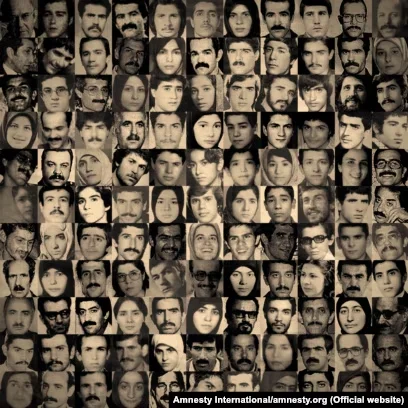
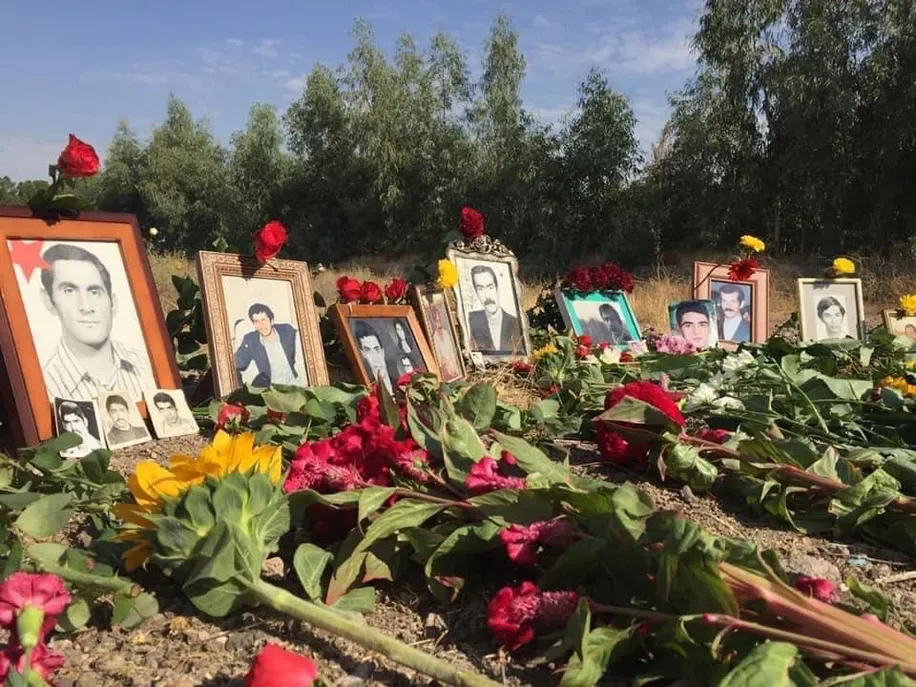
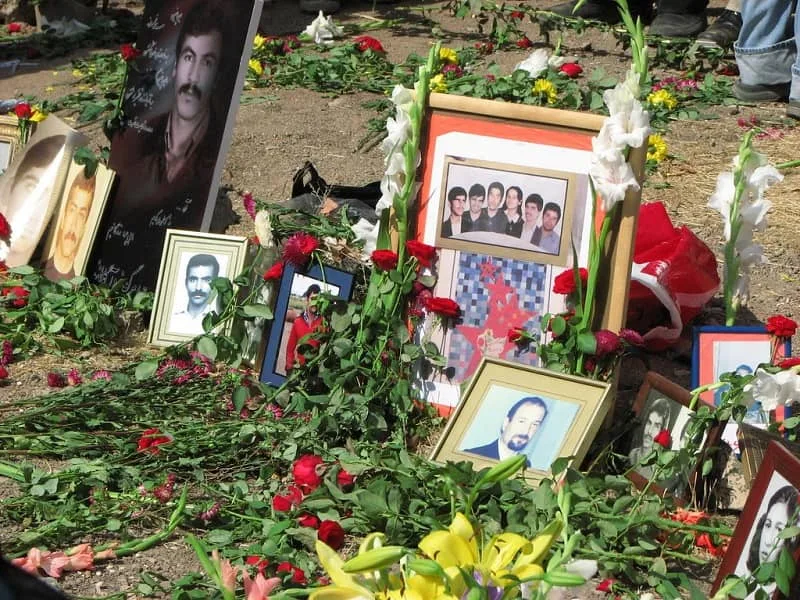
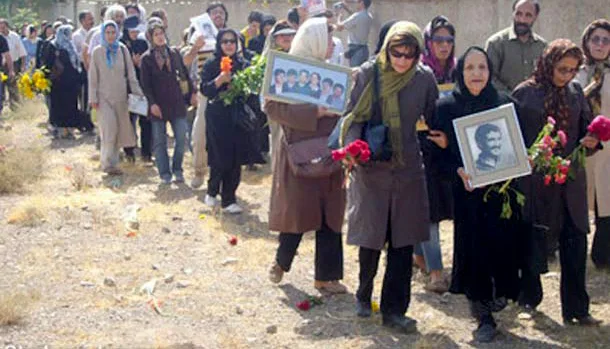
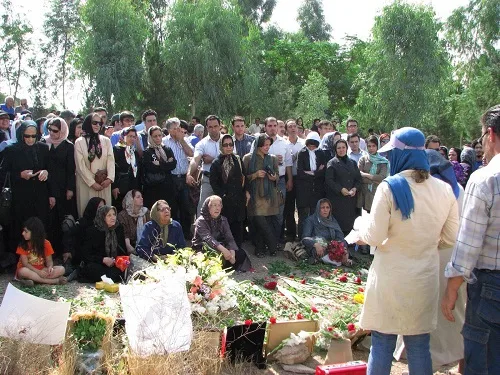
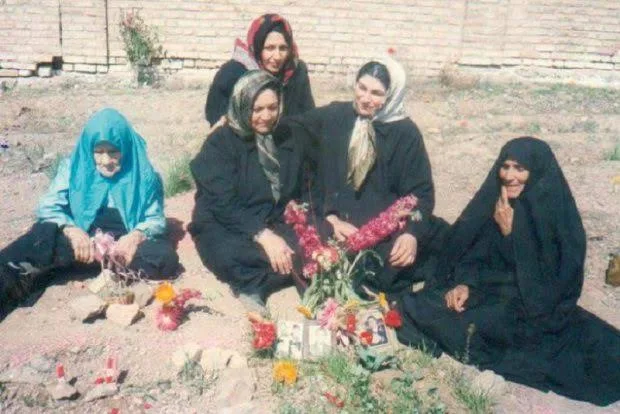
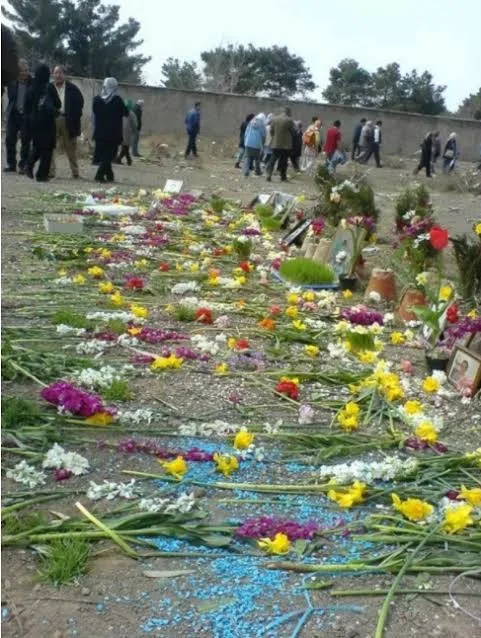
Khavaran is a cemetery southeast of Tehran. Leftists executed in the 1980s were buried there from 1981, many in unmarked mass graves, among them members of the Tudeh Party, the Fedaian, Rah-e Kargar and Komala. In 1988, Amnesty International says, at least 5,000 political prisoners were killed on the Supreme Leader’s order, hundreds of them leftists and Kurdish activists, alongside members of other opposition groups.
The authorities have never published a death toll. They bulldozed the graves in 2009, and in 2022 walls and surveillance cameras went up around the site. Mothers and families have kept returning, every year, to mourn.
Mansour Osanloo
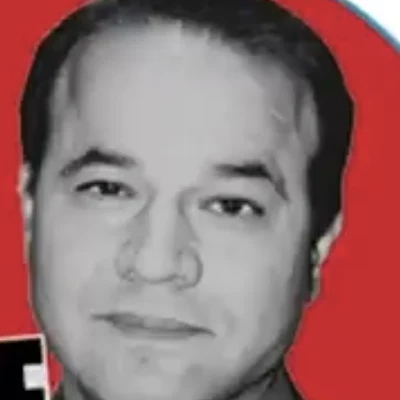
A bus worker and syndicalist who spoke out for workers’ rights was attacked with knives by men from state-controlled labour bodies, while security forces looked on.
Osanloo led the independent union of Tehran’s bus workers. On 9 May 2005, as the union held its founding meeting, the gathering was attacked. According to the Center for Human Rights in Iran, Osanloo suffered knife wounds that needed stitches in his neck and tongue. Security forces present did not intervene, and the ICFTU says state agents watched and filmed the attack.
It was Osanloo, not his attackers, who was then jailed. The Intelligence Ministry detained him later that year, and after further arrests he was sentenced in 2007 to five years for “acting against national security” and “propaganda against the state.” He was eventually released on bail after an international campaign by trade unions.
Why we judge by actions
As leftists, we must be able to tell who is most antithetical to our cause, and to distinguish the degrees to which regimes oppress their people.
We call out “leftists” and tankies who profess to be left but align with far-right religious groups. We argue that the rise of right-wing politics in liberal democracies is fed by the rise of far-right theocratic politics elsewhere. Prioritising the most extreme oppressors gives us an actual plan to advance global liberation, in a realistic, step-by-step way.
It also means our words and actions are consistent with each other. We don’t just profess to be on the left; we have a plan to achieve leftist goals.
Regime change in Iran
LRCI believes in the overthrow of the theocratic regime that has held power in Iran since 1979.
We will not interfere with any movement working toward that end, and we will help such movements where we can.
We will not oppose the establishment of a new regime, whatever camp it comes from, knowing full well that it will be much further to the left than the regime it replaces.
Once the theocracy has fully disintegrated, we may oppose some policies of the new government, whether it is left, right or centre. Not before.
Who counts as a leftist, and how to join
The left must be consistent between its message of social justice and its actions. Verbal support for an oppressed class is not enough to make someone a leftist: their actions have to line up with their words and professed beliefs.
Actions matter far more than words, because actions produce real outcomes for the oppressed. If someone’s actions support groups that oppress the left in the most brutal way, it is silly to call them a leftist rather than far right, whatever they profess.
Marxism is, in its mainstream traditions, atheist. A communist who professes atheism cannot also support a theocracy, the polar opposite of an atheist’s view of governance. That would make their atheism a sham and put them on the far right, so far as their actions and their effects in the real world go.
Likewise, if someone claims to believe in workers’ rights but aligns with a regime whose loyalists knife union organisers, their words are a sham, and it is silly to call them a leftist rather than far right.
If you believe that consistency between words and actions matters for the left, and you agree that overthrowing far-right theocracy comes first, we invite you to join us.
To join, write to contact@leftists4iran.com.
Tell us briefly why you agree. A first name or an alias is enough. We do not publish the names of members.
Our positions
Our positions on specific issues are as follows.
Israel and Palestine
We support a two-state solution: a Palestinian state, just as we support a Jewish nation alongside it. This is not achieved by supporting far-right, fundamentalist groups that hate Jews.
We hold that supporting a far-right extremist group in Palestine is wrong for a leftist. It is also counter-productive, because it breeds a right-wing reaction in Israel and the West, leading to further oppression and loss of life for Palestinians themselves. While supporting the Israeli left, we also support moderate, non-theocratic groups in Palestine.
Islam
We have no collective antagonism toward private spiritual practice. We oppose forcing others into religion, and we oppose using religion as a source of war, law or governance.
Our opposition is sharper where the religion used in war and government is a literal or fundamentalist reading. The theocratic group in Iran uses a fundamentalist interpretation of Islam to normalise the most violent and extreme policies, including the execution of leftists as apostates.
The monarchist movement
Crown Prince Reza Pahlavi has publicly set out a plan to hold free and fair elections to decide Iran’s next system of government, within a liberal, secular, democratic framework. We welcome that approach, and we have full confidence that he will carry it out.
We believe Iran needs a new system, and since any new system will be much further to the left than the current regime, the establishment of one should be the agenda of every leftist who wants their words and actions to line up. We may oppose some policies of a new government, whether it is right, left or centre, but only after it is established and the fundamentalist group has clearly lost power.
In other words, we believe in step-by-step emancipation over complete annihilation.